How I Got From My Research Question to My Findings
But first, an important definition…
Affective Polarization: animosity and distrust between those of opposing political alignments (i.e., polarization of emotions, not policy)
Method: Survey Experiment
Pre-Treatment Survey
Obtains informed consent, collects demographic data, assesses respondents’ political identities, and takes primary reading of affective polarization
Treatment
Participants view one of three potential stimulus images (simulated political debate with either civil rhetoric, combative rhetoric, or an apolitical control image — see to the right on desktop or below on mobile)
Post-Treatment Survey
Remeasures affective polarization to determine the presence of any change after viewing the treatment image.
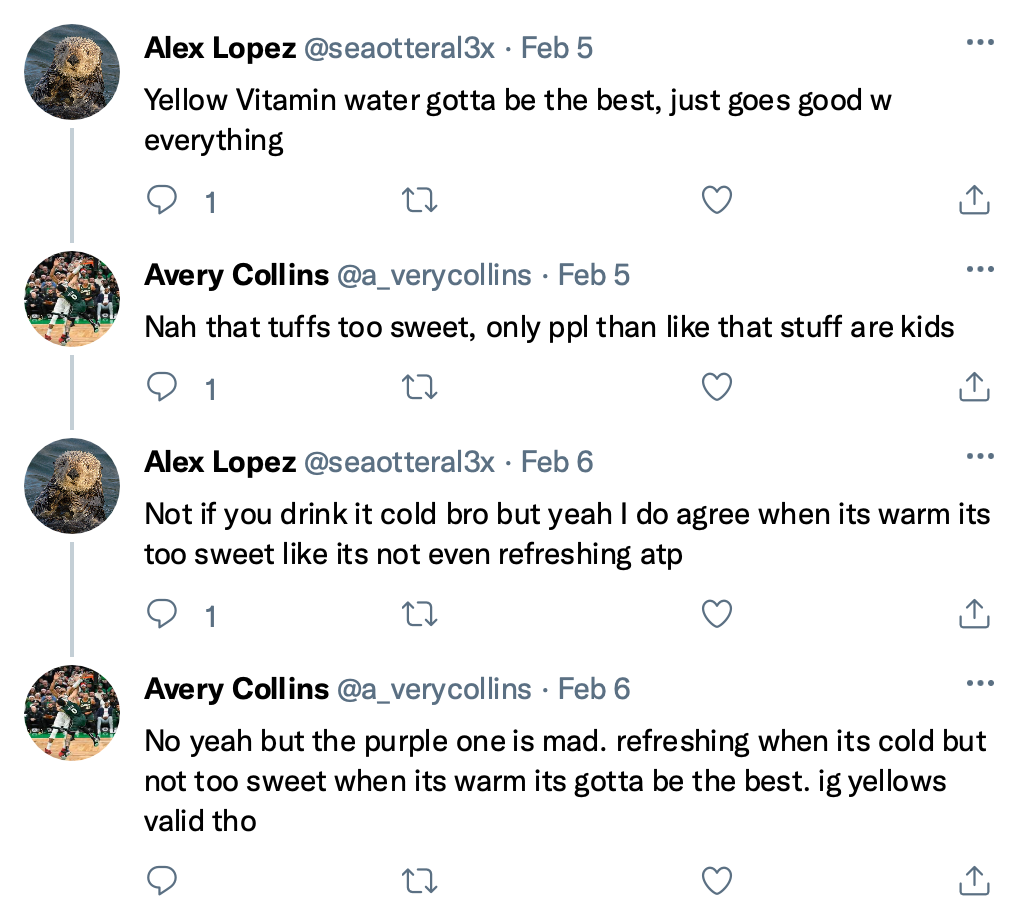

Civil (above)
Combative (below)
Control (right)

Results
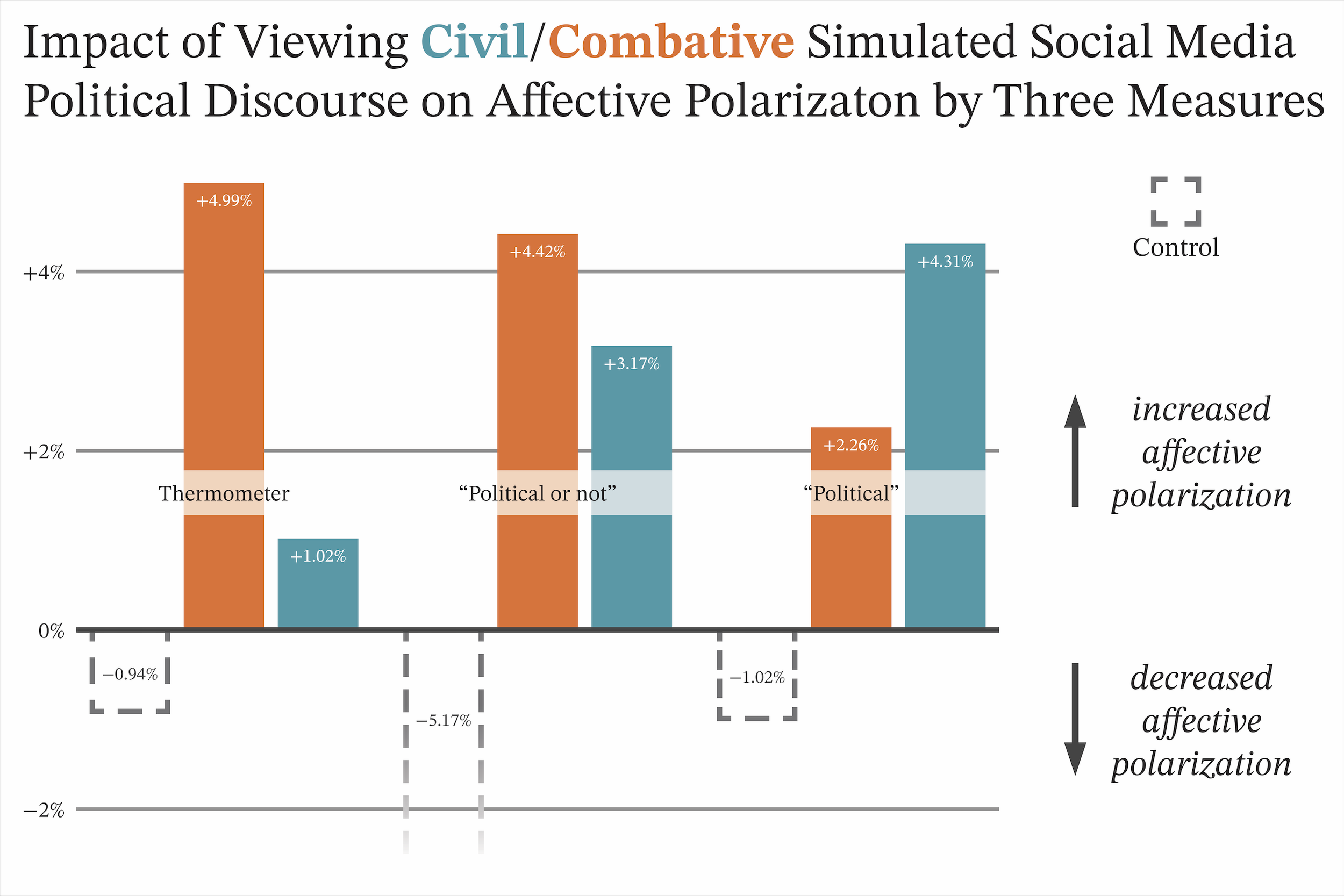
How to Read This Chart
“Thermometer,” “‘Political or not,’” and “‘Political’” refer to three measures of affective polarization used; they are organized in decreasing order of strength and validity
A higher bar indicates a stronger correlation between viewing a stimulus (which one being indicated by color) and increased affective polarization.
e.g., respondents who viewed the combative stimulus reported a 4.99% increase in affective polarization by the “Thermometer” measure.
Finding
Viewing civil political rhetoric does result in a lesser increase in affective polarization than viewing combative political rhetoric.
However, the only way to decrease affective polarization is to not view any political stimulus whatsoever.